Beyond the Chatbot: Understanding the World of Digital Humans

As we move through late 2025, the AI revolution has officially migrated from the text box to the “human interface.” Businesses are no longer just asking what their AI says, but how it says it.
Please see my other post on ChatBots and RAG
Enter the Digital Human—lifelike, AI-powered avatars designed to bridge the gap between robotic automation and human empathy. To succeed in this landscape, leaders must look past the visual “skin” and understand the architectural layers that make a digital human either a high-performing asset or a hollow gimmick.
1. The Critical Split: Real-Time vs. Pre-Rendered Content
The first strategic decision is determining the nature of the interaction. In 2025, the market has bifurcated into two distinct technological paths:
- Real-Time Interactive Avatars (The “Live” Employee): These are designed for live, two-way conversations. They react in milliseconds, using “Synthetic Animation” to sync facial expressions on the fly. This is the world of UneeQ and Soul Machines.
- Best For: Customer service, virtual concierges, and soft-skills training where an immediate emotional response is required.
- Script-to-Video Production (The “Content” Engine): These tools (like Synthesia or HeyGen) generate pre-recorded video files. You provide a script, and the system renders a high-fidelity video.
- Best For: Marketing ads, personalized e-learning modules, and massive-scale video localization.
2. The Architecture: The Avatar is the “Face,” Not the “Brain”
A common misconception is that buying a digital human gives you an “all-knowing” AI. In reality, a digital human is a frontend interface. To be effective, every digital human relies on two distinct layers:
The Backend (The Brain)
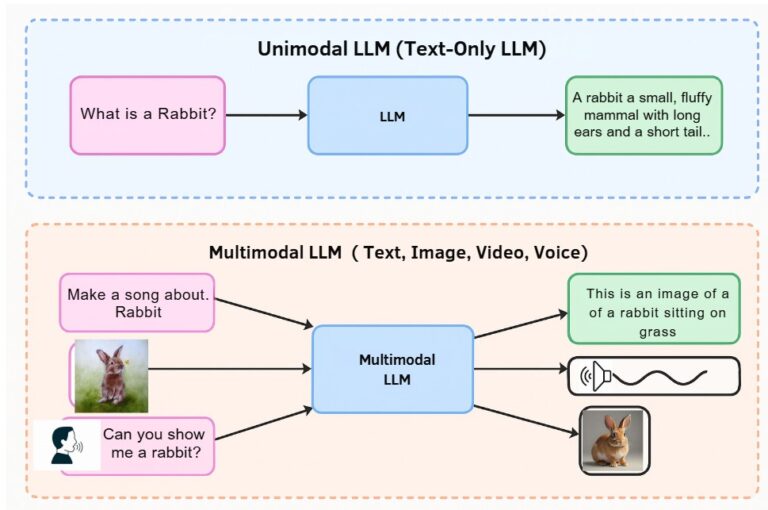
This is your Knowledge Layer, usually a fine-tuned Large Language Model (LLM) like GPT-4, Gemini 1.5, or Claude. This “brain” must be developed separately to hold your company data, FAQs, and compliance rules.
Rule of Thumb: If your backend “brain” is poorly trained, your digital human will simply look like a very realistic person who is very bad at their job.
The Frontend (The Experience Layer)
The avatar’s job is to deliver the brain’s information with empathy. This includes “idle” behaviors like breathing, shifting weight, and “emotional prosody”—adjusting its voice and face if it detects the user is frustrated or sad.
3. The Creative Fuel: Nano Banana & Google Veo
In 2025, the “production value” of an AI bot determines user trust. This is where high-fidelity generation models act as the Set Designer and Wardrobe for your digital human.
- Nano Banana (Gemini 2.5/3 Flash Image): This engine is the gold standard for Character Consistency. It allows a brand to design a digital human once and maintain a 100% identical look across thousands of different scenes or outfits. If your avatar needs a seasonal wardrobe change or a specific branded uniform, Nano Banana allows “conversational editing” to update the assets instantly.
- Google Veo: This is the cinematic video engine. While the digital human handles the talking, Veo generates the “B-roll” or the immersive environment. It creates physically accurate backgrounds—like a busy retail floor or a shifting medical office—complete with native audio (ambient noise and sound effects) that align perfectly with the scene.
4. Vendor Spotlight: The UneeQ Ecosystem
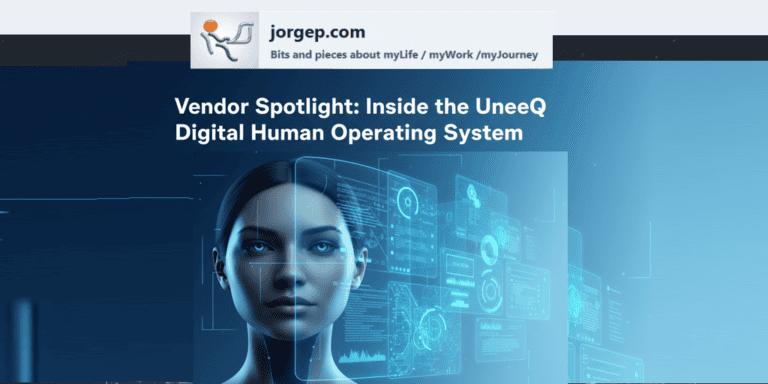
While many providers offer “talking heads,” UneeQ has positioned itself as a “Digital Human Operating System” for the enterprise.
The Synanim™ Difference
UneeQ’s proprietary Synanim™ animation engine is designed specifically to beat the “Uncanny Valley.” It translates AI responses into Micro-expressions in under a second, ensuring the avatar’s reactions feel spontaneous rather than robotic.
Immersive Training 2.0
UneeQ’s late-2025 focus is Active Practice. Instead of watching a training video, employees roleplay with a digital human that reacts to their delivery. If a sales rep sounds too aggressive, the UneeQ avatar will look visibly defensive, teaching the impact of tone through a “feedback loop” of emotional intelligence.
5. The 2025 Market Map & Pricing
| Tier | Best For | Est. Cost | Key Players |
| Enterprise Interactive | Global brands, high-stakes coaching. | $10k – $250k+ /yr | UneeQ, Soul Machines |
| Professional Content | Scalable marketing & video ads. | $600 – $5k /yr | HeyGen, Synthesia |
| Creative Engines | Set design, consistency & B-roll. | $20 – $250 /mo | Nano Banana, Veo, Sora |
| Entry-Level Agents | Small business web assistants. | < $1,200 /yr | D-ID, Hour One |
Summary: Your Implementation Checklist
- Build the Brain First: Do you have a fine-tuned information set for the AI to rely on?
- Define the Interaction: Do you need a live conversation (UneeQ) or just video content (Synthesia)?
- Secure Identity: Use tools like Nano Banana to ensure your character looks consistent across all touchpoints.
- Ownership: Ensure your contract allows you to own the Intellectual Property of your custom digital human.
Please see my other post on ChatBots and RAG