
Who Owns Greenland?
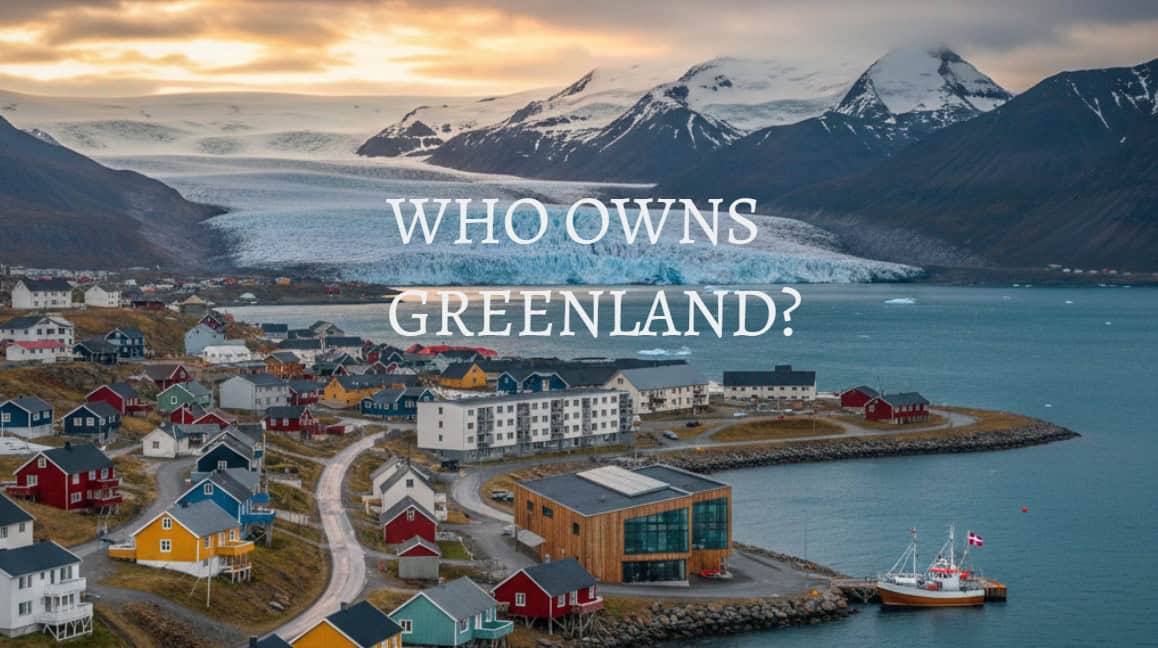
The Surprising Truth About Land, Homes, and Money on the World’s Largest Island
I’ve been following the news about Greenland lately and honestly; it’s been wild to watch. I wanted to speak more clearly about what’s actually happening, so I did a little deep dive into the facts. The results of my research were so interesting that I had to share them with you all here.
Before diving into the mechanics of land and loans, it’s important to understand the political “marriage” that shapes life on the island.
Greenland is a self-governing territory within the Kingdom of Denmark. Think of it as a highly autonomous country that shares a monarch, currency (the Danish Krone), and foreign policy with Denmark. While Greenland has its own parliament and handles its own internal affairs—like education, health, and land use—it remains part of the Danish Commonwealth. This relationship is a blend of colonial history and a modern push for independence, and it’s a big reason why Greenlandic laws often look like a unique mix of Arctic tradition and Nordic bureaucracy.
Greenland is a land of superlatives: the world’s largest island, home to the second-largest ice sheet, and one of the most sparsely populated places on Earth. With roughly 56,700 residents—about a third of whom live in the capital, Nuuk—it is a vast wilderness where human footprints are rare.
But if you wanted to plant a flag and buy a piece of that wilderness, you’d hit a legal wall. In Greenland, the concept of “private property” works very differently than it does in the U.S. or Europe.
Here is how land, life, and the economy actually function in a country where nobody owns the ground they stand on.
1. The Golden Rule: No One Owns the Land
In Greenland, private land ownership basically does not exist. Almost all land is publicly owned and administered collectively by the Government of Greenland (Naalakkersuisut) and local municipalities.
This isn’t just modern bureaucracy; it’s a reflection of deep-rooted Inuit traditions of communal land use, later reinforced by Danish legal systems. The land is viewed as a collective good, not a commodity to be bought, sold, or speculated on.
If you can’t buy it, how do you use it?
Instead of a deed, you get Usage Rights. This is essentially a very strong, long-term lease (often lasting between 30 and 99 years).
- You can: Build a house, sell that house, or pass it to your heirs.
- You cannot: Own the dirt underneath the house or hold onto a vacant lot just to wait for the price to go up.
2. Houses vs. Commercial Buildings: The Rules of the Game
While you don’t own the land, you 100% own the structure you build on it.
For Homeowners
Building a home in Greenland is a protected investment. While your land-use right has an “expiration date” (like 99 years), the default is almost always routine renewal. As long as you pay your modest fees and use the home as intended, the system behaves like perpetual ownership. If the government ever did need the land for a public project (which is rare), they are legally required to compensate you at fair market value for the building.
For Commercial Developers
For office buildings or apartment complexes, the stakes are higher. These developers typically negotiate formal 50- to 99-year agreements.
- Annual Fees: Unlike a private home, where fees are often symbolic, commercial entities pay higher rates based on floor area and location.
- Foreign Restrictions: Foreigners cannot own land, and commercial projects usually require a Greenlandic company and government approval to protect local interests.
3. How Do You Get a Loan Without Collateral?
If a bank can’t seize your land if you default, why would they lend you money?
In Greenland, banks don’t lend against the “dirt”—they lend against the physical asset (the building) and the contractual land-use right.
- Mortgages: Work similarly to the U.S., but the loan term must be shorter than the remaining land-use right.
- Risk Pricing: If a lease has 80 years left, the bank treats it like a normal loan. If it only has 25 years left, the bank will likely insist on a lease renewal before approving a mortgage.
4. What Pays for the Welfare State?
In many Western countries, property taxes on land value are what pay for local schools and hospitals. In Greenland, because land isn’t “owned” or heavily monetized, the funding model is different.
Land-use fees do NOT pay for healthcare and schooling. Those services are funded by:
- High Income Taxes: A Nordic-style welfare model where citizens contribute through earnings.
- The Danish Block Grant: An annual transfer from Denmark that covers roughly half of the public budget.
- Natural Resources: Specifically fishing licenses and royalties.
Greenland intentionally keeps land fees low to ensure housing stays accessible and to prevent land from becoming a revenue engine that drives up the cost of living.
The Bottom Line for Homeowners:
Greenland’s system is a unique hybrid of ancient communal values and modern Nordic law. It prioritizes sovereignty and stability over speculation and profit.
| Question | Answer |
| Is private land ownership allowed? | ❌ No |
| Can you build and own a house? | ✅ Yes |
| Can foreigners buy land? | ❌ No |
| Is it a “lease”? | ✅ Yes (usually 99 years) |
| Do you lose your house after 99 years? | ❌ No, renewal is the standard |
Bottom Line for the country of Greenland
1. The Legal Owner: The Kingdom of Denmark
Legally, Greenland is part of the Kingdom of Denmark (alongside Denmark and the Faroe Islands).
- Sovereignty: Denmark is the “parent state.” It handles Greenland’s defense, currency (the Danish Krone), and ultimate foreign policy.
- The Crown: King Frederik X is the ceremonial Head of State.
- Not for Sale: In response to renewed US interest in 2025 and 2026, both the Danish and Greenlandic governments have repeatedly stated that under the Danish constitution, Greenland is not for sale.
2. The Practical Owner: The People of Greenland
While Denmark holds the “title” to the island, the Self-Government Act of 2009 shifted almost all actual power to the people who live there.
- Domestic Control: The Greenlandic Parliament (Inatsisartut) and Government (Naalakkersuisut) run the island’s health, education, justice, and natural resources.
- The Right to Leave: Most importantly, the 2009 Act explicitly recognizes Greenlanders as a “people” under international law with a legal right to self-determination. If Greenland holds a referendum and votes for independence, Denmark is legally bound to negotiate that “divorce.”