The Economics of Intelligence (Jan 2026)

To learn more about Local AI topics, check out related posts in the Local AI Series
Have questions, ideas to share, or just want to connect? I’d love to hear from you! Check out my About Page to learn more about me or connect with me.
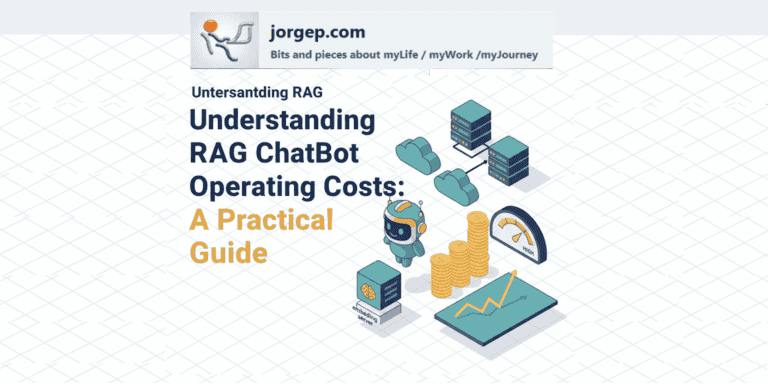
Please see my other post on ChatBots and RAG
Choosing the right LLM isn’t just about performance anymore—it’s about the economics of scale. As we enter 2026, the cost of intelligence is dropping, but the volume of tokens being “burned” is skyrocketing.
If you are building an AI-powered application today, understanding the nuances of token consumption is the difference between a profitable product and a massive API bill.
Why 1 Million Tokens Isn’t as Much as You Think
For a casual user chatting with an AI, 1 million tokens feels like a vast ocean—it’s roughly 750,000 words, or several thick novels. In a simple chat interface, that’s enough “runway” to last months.
However, for developers and research agents, that ocean can dry up in minutes. Here’s why:
- Agentic Loops: A research agent doesn’t just “answer.” It plans, searches, reflects, and self-corrects. A single user request might trigger 20+ internal “thoughts” and tool calls, ballooning token usage by 10x to 50x compared to a standard chat.
- Context Stuffing: Developers often feed entire codebases or 100-page PDFs into the “context window.” Every follow-up question re-processes those thousands of tokens, leading to exponential costs.
- Reasoning Overheads: Modern models like GPT-5 or the Qwen Reasoning series use “thought tokens” to solve complex problems. You are often billed for the model’s internal monologue, even if the final answer is short.
Top 10 LLM API Costs (January 2026)
Prices per 1,000 tokens as extracted from llmpricing.dev.
| Model Name | Provider | Input Cost (per 1K) | Output Cost (per 1K) | Free Tier |
| gemini-embedding-001 | $0.00 (Free), $0.00015 (Paid) | N/A | Yes | |
| gemini-2.5-pro | $0.00 (Free), $0.00125/$0.0025 | $0.00 (Free), $0.01/$0.015 | Yes | |
| gemini-2.5-flash | $0.00 (Free), $0.0003* | $0.00 (Free), $0.0025 | Yes | |
| gemini-2.5-flash-lite | $0.00 (Free), $0.0001* | $0.00 (Free), $0.0004 | Yes | |
| text-embedding-3-small | OpenAI | $0.00002 | N/A | No |
| qwen-flash | Alibaba | ~$0.000021 – $0.000171 | ~$0.000214 – $0.001714 | No |
| qwen-flash (reasoning) | Alibaba | ~$0.000021 – $0.000171 | ~$0.000214 – $0.001714 | No |
| qwen-turbo | Alibaba | ~$0.000043 | ~$0.000429 | No |
| qwen-turbo-latest | Alibaba | ~$0.000043 | ~$0.000086 | No |
| gpt-5-nano | OpenAI | $0.00005 | $0.0004 | No |
*Note: Gemini Flash pricing covers text/img/video; audio input is billed at $0.001.
Developer Pro-Tips for Cost Management
- Use the Right Model for the Right Task: Don’t use a “Pro” or “Reasoning” model for simple classification or data extraction. Implement Model Routing:
- Small Models (Flash/Nano): Use for summarization, chat routing, and basic UI responses.
- Large Models (Pro/GPT-5): Reserve these for complex logic, multi-step planning, or architectural decisions.
- The Embedding Advantage: Use cheap embedding models (like
text-embedding-3-small) to build RAG systems. This ensures you only send the most relevant snippets to the expensive LLM, rather than the whole document. - Control the “Reasoning” Tax: If a model has a “reasoning effort” setting, set it to low for straightforward tasks to prevent the model from over-thinking (and over-billing).
- Prototype on Free Tiers: Google’s Gemini series remains highly attractive for developers because of its generous free tiers, allowing you to debug your agentic loops before moving to a paid production environment.
The bottom line: In 2026, 1M tokens is a lot of “talk,” but for a developer building the next generation of autonomous agents, it’s just the starting line. Optimize your routing early, or your ROI will vanish into the context window.