
Is Europe Moving Away From Microsoft?
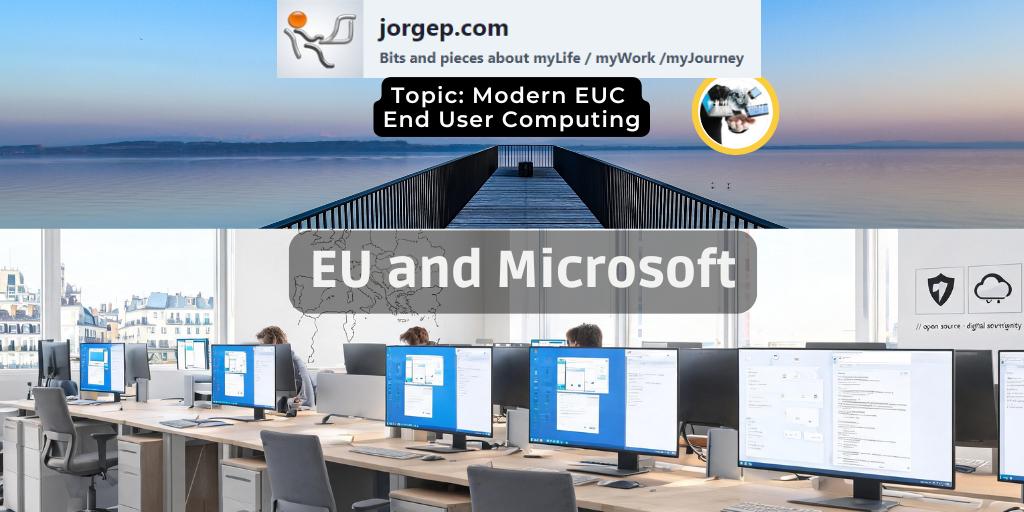
I have seen a lot of articles and reports about European countries, especially in the EU, moving away from Microsoft and other U.S. tech providers. At first glance, it may sound like a simple privacy debate, but the issue is really about digital sovereignty, data control, and long-term dependence on foreign technology.
Europe is not abandoning Microsoft overnight, but a real shift is underway. Governments and some organizations are trying to reduce their dependence on Microsoft because of privacy, legal, and sovereignty concerns. The trend is strongest in sensitive public-sector environments, where control over data matters as much as convenience.
What is driving the shift
The move away from Microsoft in Europe is not just about one single issue. It is the result of several overlapping concerns:
- U.S. legal reach over EU data
Microsoft is a U.S. company, and U.S. laws such as the CLOUD Act can allow U.S. authorities to request data from U.S. firms, even when that data is stored in Europe. This creates legal uncertainty for European governments and organizations handling sensitive information like health records, justice data, defense systems, and citizen information. - Trust and control over data
The core question is not “Microsoft is bad,” but “who ultimately controls the data?” Many European leaders feel uneasy when a foreign vendor has the legal and technical ability to access or influence data that is supposed to be under European control. - Digital sovereignty
Europe is pushing for “digital sovereignty,” which in plain terms means:- More control over where data lives (ideally in European datacenters),
- More control over which laws apply to that data (EU law, not just U.S. law), and
- More control over which vendors run the systems behind public services.
- Strategic dependence on foreign tech
Beyond privacy, there is a growing concern about relying too heavily on U.S. technology for critical infrastructure. If geopolitical tensions rise or U.S. policy changes, Europe could find itself dependent on foreign systems that it cannot easily replace or control.
These factors together are why governments and some organizations are actively exploring alternatives to Microsoft, rather than just accepting the status quo.
What Europe is moving to
Europe is not replacing Microsoft with one single product. Instead, the shift is toward a mix of open-source and European-controlled alternatives.
Common replacements include:
- LibreOffice for documents and spreadsheets.
- Nextcloud and similar platforms for files, collaboration, and communication.
- Office.eu and Euro-Office as European productivity suites.
- European cloud providers or sovereign cloud setups for sensitive workloads.
Will Windows be affected
Yes, but only partly. Windows is not the main target of this movement, and many organizations will keep using it because it is deeply embedded in business workflows. The bigger pressure is on Microsoft 365, Azure, Teams, and cloud hosting. Over time, though, if organizations replace enough Microsoft services, Windows becomes less central to their stack.
Some public institutions are also moving specific systems off Windows and into Linux-based environments, though that is less universal than the move away from Microsoft cloud services.
Good News for Linux Desktop Alternatives!
Yes, this movement does open the door to Linux alternatives on the desktop. As European governments and organizations look for more control over software, updates, and data, Windows becomes less automatic as the default choice and Linux becomes a more realistic option for sensitive or sovereignty-focused environments.
The European sovereignty push is not just about cloud services; some public-sector migrations are explicitly moving from Windows to Linux on desktops and laptops. France, for example, has been reported as shifting some government systems from Windows to Linux, which shows that desktop operating systems are part of the conversation, not just office software.
Linux fits the sovereignty argument because it is open source, auditable, and can be run without depending on a U.S. vendor’s license model or telemetry stack. For organizations, that also means more freedom to control updates, system behavior, and long-term support on their own terms.
If these migrations continue, Windows could slowly lose some of its dominance in institutions that value sovereignty over familiarity. In that sense, Linux alternatives on the desktop are one of the biggest long-term consequences of Europe’s move away from Microsoft, with distros such as **Ubuntu, Linux Mint, openSUSE, Debian, and Zorin OS** often mentioned as practical replacements.
That does not mean Windows is going away. In most businesses, it will likely remain the standard for compatibility and user familiarity, but the trend does matter because it creates real momentum for desktop Linux in government and public-sector settings. Over time, that could slowly reduce Microsoft’s dominance in areas where control and independence matter more than convenience.
How Microsoft is responding
Microsoft is not ignoring the trend. It is responding with a strong European sovereignty strategy, including the EU Data Boundary, sovereign cloud options, and larger datacenter investment in Europe. It has also promised more control, more local compliance, and more legal protections for European customers.
This is basically Microsoft’s message: “You can keep using our services, but with more European control built in”. That is an attempt to keep customers from leaving while also meeting political and regulatory pressure.
What this means long term
The most likely future is not a total break between Europe and Microsoft. Instead, Europe will probably keep pushing for more sovereignty, more local hosting, and more open-source options, while Microsoft adapts to stay competitive. That means Microsoft may face slower growth in some public-sector markets, but it is unlikely to disappear from Europe.
So is it real?
So yes, the move is real, but it is best understood as a search for control, not just privacy. Europe wants technology that it can govern on its own terms, and Microsoft now has to prove it can fit that model
References
- Microsoft’s Cloud Sovereignty Promises: Progress or Patchwork — KuppingerCole
- What the CLOUD Act Really Means for EU Data Sovereignty — WIRE
- Microsoft’s European Cloud Data to Remain in Europe — Congruity360
- Microsoft Expands Digital Sovereignty Capabilities — Microsoft News
- EU Data Sovereignty: Why European Organizations Are Rethinking Cloud Data Control — HYCU
- European Union Model Clauses — Microsoft Learn
- Cloud Sovereignty Framework — European Commission
- Regional and Country Compliance — Microsoft Trust Center
- What is Microsoft Sovereign Cloud? — Microsoft Learn
- Microsoft Sovereign Cloud – a genuine alternative? — activeMind.legal
- Some YouTube Videos on the Topic:
- France KICKS OUT Microsoft OS – 2.5M Gov Devices to Linux — focuses on France’s Linux migration and broader government tech shifts.
- European Governments Move Away From U.S. Tech Platforms — discusses digital sovereignty and replacing U.S.-based services.
- France Ditches US Tech: Will Europe Follow? — explains why France is moving away from American tech and whether Europe may follow.
- Microsoft LEAKS European Regulators to USA — covers a more recent privacy and trust controversy tied to the sovereignty debate.
- Europe is slowly ditching Microsoft: why it’s happening & why … — a broader explainer on the trend and its limits.