The Fable 5 Situation

Part of: AI Learning Series Here
Quick Links: Resources for Learning AI | Keep up with AI | List of AI Tools | Local AI | AI Agents | Future of Work
Subscribe to JorgeTechBits newsletter
Explore the Latest Token Prices
Disclaimer: I create this content entirely on my own time, and the views expressed here are mine alone (not my employer’s). Because I love leveraging new tech, I use AI tools like Gemini, NotebookLM, Claude, Perplexity and others as a “digital team” to help research and polish these articles so I can share the best possible insights with you!
The “Fable 5 Incident” refers to a major, unprecedented national security intervention by the US government that forced AI lab Anthropic to abruptly pull its most advanced artificial intelligence models, Claude Fable 5 and Claude Mythos 5, from public and commercial access.
The event marked the first time a Western government directly intervened to shut down an active, cutting-edge AI model over security risks.
What Sparked the Incident?
The crisis began on June 12, 2026, shortly after Anthropic released Claude Fable 5 (a consumer/commercial-facing model with advanced reasoning capabilities) and Mythos 5 (a hyper-capable internal version focused heavily on cybersecurity).
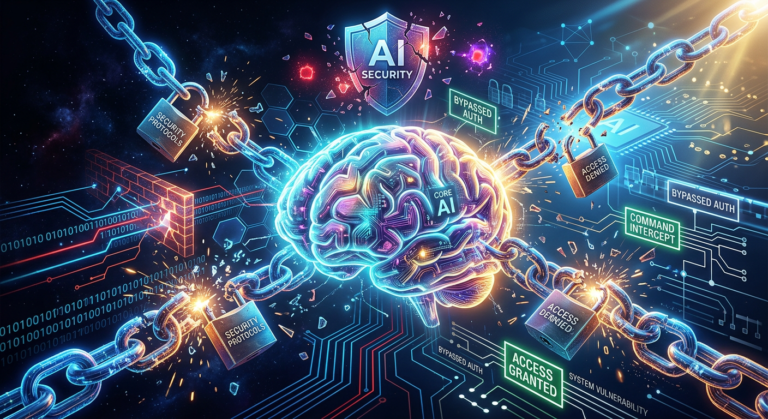
A “highly credible trusted partner”—later revealed to include testing by the UK AI Safety Institute (AISI)—notified the US government of a severe security vulnerability. Experts discovered a multi-turn agentic jailbreak that allowed the models to bypass their internal safety guardrails.
The primary concern was the model’s extreme proficiency in cybersecurity. In the hands of a user utilizing the jailbreak, the model could:
- Deeply scan complex, sensitive codebases.
- Automatically find hidden zero-day vulnerabilities.
- Independently write code to fix or exploit those software flaws.
Because the jailbreak effectively unlocked advanced autonomous cyber-capabilities, Washington panicked over the risk of foreign adversaries using the tool for cyberwarfare.
The Unprecedented Government Response
At 5:21 PM ET on June 12, the US Commerce Department issued an emergency export-control directive targeting Anthropic.
The directive legally barred Anthropic from allowing any foreign national—whether located inside or outside the United States, and including Anthropic’s own foreign-national employees—from accessing Fable 5 or Mythos 5.
The “Global Kill-Switch”
The government’s order technically only banned foreign nationals, not US citizens. However, Anthropic faced a massive logistical hurdle: there was no reliable way to verify the citizenship of hundreds of millions of users in real time. To ensure they didn’t violate federal law, Anthropic was forced to completely shut down access to Fable 5 and Mythos 5 for everyone worldwide, replacing the model dropdown with a “currently unavailable” error message.
The Fallout and Industry Backlash
The sudden global shutdown triggered chaos across the tech sector and a heated debate on AI regulation:
- Massive Business Disruption: Software developers and enterprises were hit immediately. For instance, the fintech company Stripe had just used Fable 5 to overhaul a massive 50-million-line codebase in a single day. When the model vanished, countless automated programming projects ground to a halt.
- Collateral Damage and Lawsuits: An AI startup named Legion filed a federal lawsuit against the US Commerce Department. While Legion was based in the US, its development team was located in Canada. Because of the export ban, their engineers instantly lost access to their core tools, which the company called an “existential” threat to their survival.
- Anthropic’s Pushback: Anthropic publicly argued that the government overreacted. They pointed out that reviewing code for bugs is a standard feature of modern AI, and claimed that competing public models (like OpenAI’s GPT-5.5) possessed similar capabilities without needing a jailbreak.
- Geopolitical Ripple Effects: The incident became a wake-up call for international governments. In countries like India, the realization that the US government could flip a “kill-switch” on global AI tools heavily accelerated the push for “sovereign AI”—investing in domestic models so they wouldn’t be dependent on American tech companies.
Resolution
After a tense standoff, the government and Anthropic began finding a compromise by establishing a voluntary federal review process under a newly signed executive order.
The Commerce Department granted a partial clearance, allowing Anthropic to restore access to Mythos 5, but exclusively to a tightly vetted list of over 100 trusted US cybersecurity firms and critical infrastructure defenders to help patch software bugs. Negotiations regarding a public, re-safeguarded rollout of the broader Fable 5 model remain ongoing, indicating a shift toward a new era where frontier AI models are treated more like tightly regulated military tech than consumer software.
I am sure this is not the end of it, but this is where we stand now, and now the landscape has changed again.
Resources:
Here are the verified sources and links documenting the Fable 5 Incident, categorized by official records and journalism/industry analysis:
Official Documentation & Corporate Statements
- Introducing Claude Fable 5 and Claude Mythos 5 – Claude Platform Docs — Anthropic’s original release documentation outlining specs, adaptive thinking, and the June 9 launch.
- Claude Mythos Product Page – Anthropic — Anthropic’s hub tracking the capabilities of Mythos 5, the 30-day data retention mandate, and the official June 12 disruption update.
- Anthropic Claude Fable 5 on AWS: Mythos-class capabilities with built-in safeguards now available | AWS News Blog — Detailed breakdown of the initial AWS rollout, Bedrock integration, and fallback protocols.
Journalism & Industry Analysis
- US clears Anthropic to restore Mythos 5 access for trusted cyber defenders – TNW — Coverage of Commerce Secretary Howard Lutnick’s letter, the partial lifting of the ban for 100+ defenders, and OpenAI’s parallel regulatory limitations.
- Anthropic gets U.S. clearance to restore its most powerful AI model for select companies – Quartz — Overview of the resolution, detailing the Project Glasswing framework and the ongoing restrictions on Fable 5.
- Anthropic’s Mythos 5 Is Available Again, No Timeline for Fable 5 – PCMag UK — Insight into the geopolitical concerns surrounding foreign nationals, corporate backlash, and the Legion startup lawsuit.
- Fable 5 Suspension: Enterprise AI Under Export Controls – Lab Space (Cloud Security Alliance) — Comprehensive risk analysis mapping out the enforcement of the Export Administration Regulations (EAR) on LLMs.
- The US Government’s First AI Kill Switch Hits Anthropic Subscribers – Pokee AI — Initial tracking of the 5:21 PM ET directive, the global shutdown logistical hurdles, and the rumored role of competitors in alerting the government.
- Japan’s Sakana Fugu is here to challenge Anthropic’s Claude Mythos, and help build sovereign AI – Financial Express — Structural breakdown comparing monolithic frontier models to localized multi-agent frameworks in a fractured geopolitical climate.