Disclaimer:I create this content entirely on my own time, and the views expressed here are mine alone (not my employer’s). Because I love leveraging new tech, I use AI tools like Gemini, ChatGPT, Claude, Perplexity and others as a “digital team” to help research and polish these articles so I can share the best possible insights with you!
I love that Workplace AI is finally getting the attention it deserves. For years, most conversations focused on experimentation, novelty, and chat interfaces. Meanwhile, a quieter shift was already underway: intelligence moving closer to the user, the device, and the workflow itself.
Back when many assumed AI would remain locked in massive cloud environments, early adopters saw where things were heading. “I was into Local AI before it was cool” started as a joke—but it’s quickly becoming reality.
Several forces are converging at once. Rising token costs are forcing companies to rethink cloud-heavy strategies. Privacy and data sovereignty are now board-level concerns. Local models are improving rapidly. AI-capable PCs with NPUs are shipping at scale. And perhaps most importantly, businesses are realizing AI is far more than a chatbot.
Right now, much of the market is still operating in what I’d call a “Level 1” mindset. AI is seen as something you prompt—generate content, summarize information, answer questions. That phase mattered because it made AI accessible. But it’s only the starting point.
The real transformation begins when AI stops being a tool you visit and becomes a system that works alongside you. Not just responding—but assisting decisions, automating tasks, organizing knowledge, and anticipating needs in real time.
This is where Workplace AI becomes infrastructure.
We’re approaching what the “Tornado Phase” of the technology adoption cycle —the moment when years of experimentation turn into rapid, irreversible acceleration. Every major technology wave follows this pattern: early complexity, limited access, then a sudden collapse of barriers as usability improves and economics align. It came fast. super fast!
We saw this with personal computers. Early PCs were hobbyist machines—complex, fragmented, and inaccessible to most people. Then companies like Dell delivered fully assembled, ready-to-use systems at scale. The breakthrough wasn’t just better hardware—it was accessibility. And once that happened, adoption exploded.
AI is entering that same phase now.
What once required cloud infrastructure, technical expertise, and tolerance for rough workflows is becoming embedded directly into operating systems, productivity tools, and devices themselves. Local AI, in particular, mirrors the PC revolution: intelligence running on personal hardware, where speed, privacy, customization, and cost control all improve at once.
Organizations that recognize this early will have a meaningful advantage. Those still treating AI as “just a chatbot” risk falling behind as the pace accelerates. And unlike previous waves, this one is faster—because the infrastructure for global distribution, compute, and connectivity is already in place.
The next phase of AI isn’t about better prompts.
It’s about building workplaces where AI is part of the operating system of productivity itself.
It will be defined by how effectively organizations integrate AI into the core of their operations.
Local AI is not just part of that future. It is one of the forces making it possible today.
The hurricane isn’t coming. It’s already forming.
A slightly different version of this blog post was shared on my linkedin here
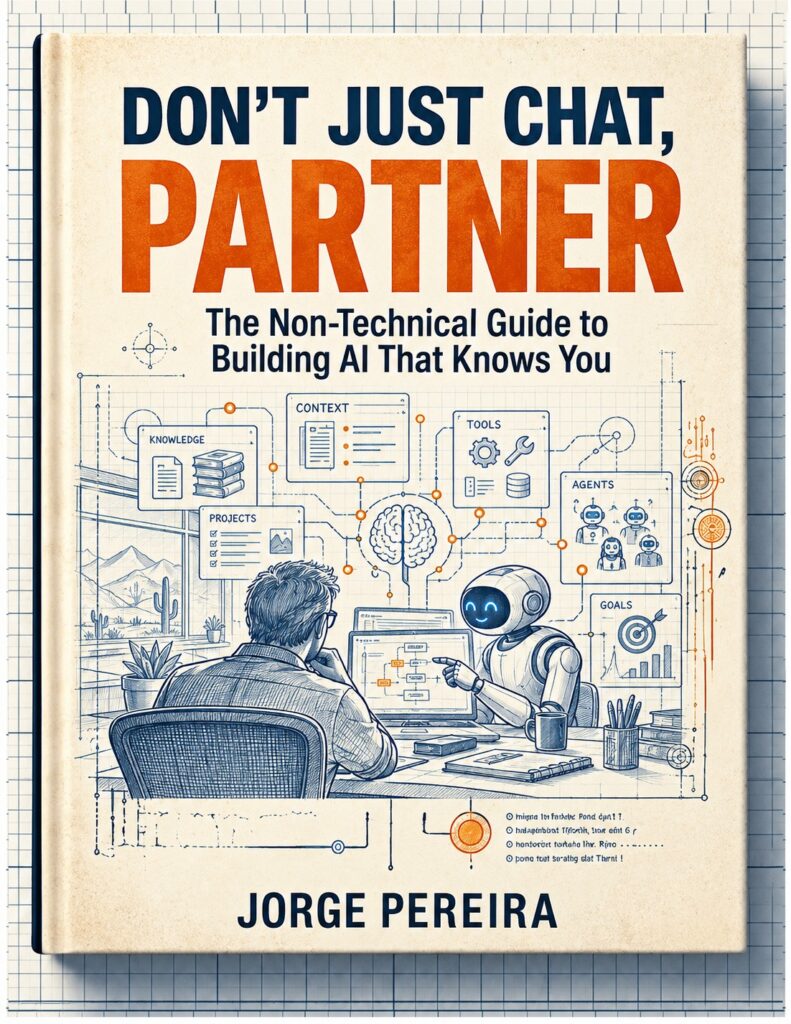
Technology is evolving so fast it is creating significant digital divide which will accelerate in the near future. The world is transforming fast. I published a new book that sets the stage for this mindset change (not a how to book but a what and why book) Don’t Just Chat with AI Delegate part of the Series: Don’t Just Chat with AI . Its available now in Amazon (Kindle and Paperback) and as an Audiobook- Eleven Labs – Check out the website for links and more info!