Jorge InfoBits 20261006: From Personal Tools to Personal AI Partners
Part of: AI Learning Series Here
Quick Links: Resources for Learning AI | Keep up with AI | List of AI Tools | Local AI | AI Agents | Future of Work | Latest Token Prices
Disclaimer: I create this content entirely on my own time, and the views expressed here are mine alone (not my employer’s). Because I love leveraging new tech, I use AI tools like Gemini, ChatGPT, Claude, Perplexity and others as a “digital team” to help research and polish these articles so I can share the best possible insights with you!
October 5, 2026
In the last issue, The MicroApp Opportunity & Challenge, I talked about how small, focused applications can improve personal productivity while creating a challenge for organizations. A tool that solves a problem for one person can quickly become something IT needs to understand, support, and govern. The opportunity is real, but controlling these tools is not always as simple as approving an application or blocking a website. I have 8 MicroApps available on my digital store with 16 others planned to help individuals with productivity
Over the last two weeks, I’ve been following a related development: personal AI agents, and the way vendors are reshaping their products around them. With MicroApps, we can create software around a particular need. With agents, we can begin delegating work across the tools and information we already use. That extends the opportunity, but it also raises the stakes. We need to understand what these systems can access, what they are allowed to do, and when they should return to us for a decision.
Microsoft Copilot Is Changing the Conversation
In my blog, Microsoft Copilot’s September 2026 Changes, I mention many of the latest changes where even the app’s name is changing: the Microsoft 365 Copilot app is becoming the Microsoft Copilot app, bringing personal and work experiences together. That is a change to the application and experience; Microsoft 365 Copilot licensing still matters.
The more interesting development is the direction behind that consolidation. Microsoft is organizing the experience around asking questions, delegating multistep work, building applications, and assigning ongoing responsibilities to agents. Home, Cowork, Code, and Autopilot represent different parts of that progression, with availability depending on rollout, licensing, and administrative settings.
This connects directly to the MicroApp discussion. Building a small application and delegating work to an agent are becoming part of the same working environment. Organizations will need to evaluate the results, permissions, and costs together. A subscription may cover everyday assistance, while advanced work introduces usage-based charges. The practical question is whether the completed work is worth its total cost, including review and correction.
Personal Agents Are Having a Moment
Microsoft is just one example of a much broader movement. Names such as GrokBot, alongside the continuing development of Hermes and Agent Zero, Muse, Dots, and many others give us plenty to explore. The approaches differ, but the common ambition is to help people accomplish work beyond an individual conversation.
In Personal AI Agents Are Having a Moment, I look at the growing activity around this category and the distinction between momentum and maturity. An agent that suggests a meeting time is useful. An agent that coordinates the meeting needs access, permissions, and a way to handle conflicts. Taking action introduces responsibilities that generating an answer does not.
That is where I think the real test begins. Does an agent complete useful work within the boundaries we set? Does it save time after we account for supervision and corrections? Can it recognize when it needs our judgment? Launches and demonstrations can attract attention, but dependable delegation is what will make these systems part of everyday life and work.
From Delegating Work to Building a Partnership
These developments also connect to something I’ve been working on for a while and it feels very timely to release it now.
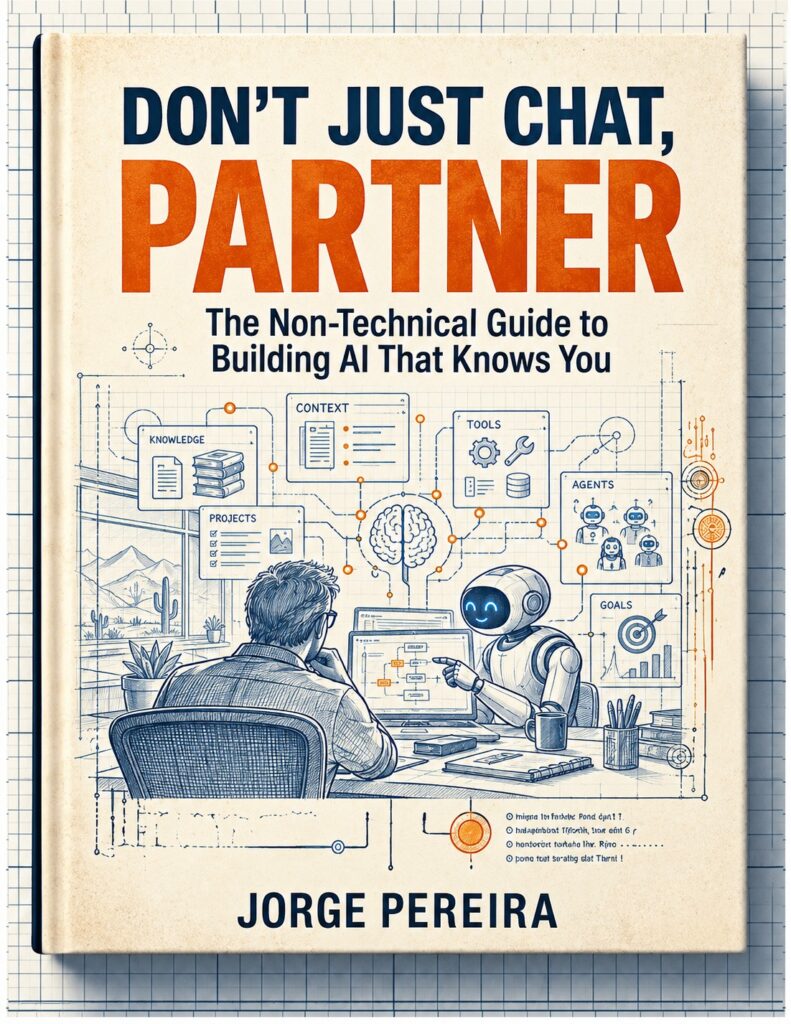
The third book in my Don’t Just Chat With AI Series was just published today as a PDF ebook available for purchase.
It is called: Don’t Just Chat, Partner: The Non-Technical Guide to Building Your AI Ecosystem
The first book focused on delegating meaningful work. The second focused on orchestrating tasks into systems. This third book explores how to bring context, knowledge, tools, and working preferences together so AI can help us continue projects, explore ideas, challenge assumptions, and put decisions into action.
For me, this is where personal agents become especially interesting. Giving an agent a task is one thing. Building an environment where it can consult the right information, understand previous decisions, and recognize the limits of its authority creates a more useful working relationship. That ecosystem may combine different models, agents, and local or cloud tools, depending on the work involved.
The book offers practical frameworks for building that relationship, including ways to reduce repeated explanations, distinguish preparation from action, and expand an agent’s authority as evidence earns our trust. It also includes a 30-day plan for starting with one meaningful project.
My Practical InfoBit
The thread connecting these posts is our growing ability to shape technology around the work we need to do. MicroApps give us focused tools anyone of us can easily build or cost effectively acquire. Agents can help carry work across tools and systems. A useful AI partnership brings those capabilities together with context, continuity, and human judgment.
Start with one recurring task or ongoing project. Give AI the relevant background, define what a useful result looks like, and make clear which actions require your approval. Then evaluate whether the arrangement actually improves your work. That is a practical foundation for deciding what to add next.
Where in your own work would better continuity with AI make the biggest difference?
Would love to hear your thoughts!
— Jorge
Keep learning. Keep experimenting. Keep connecting the dots.
This Issue of the newsletter was also published on Linkedin here and on Substack Jorge TechBites here
Join the Conversation
JorgeInfoBits AI Open Sessions are informal weekly virtual conversations about practical AI, AI agents, local and hybrid AI, and real-world adoption.
This is not a webinar or presentation. It is a conversation. Bring your questions, experiences, things you’re experimenting with — or just your curiosity. There is no fee, but space is limited. And frankly, I learn as much from your questions and experiences as you may learn from me!
Grab your coffee, tea, or beverage of choice and join us.
Every Thursday | 9:00–10:00 AM Arizona Time | 16:00–17:00 UTC
Connect & Collaborate | jorgep.com
About This Edition
Beyond the AI Hype — Short, practical, and sometimes opinionated insights about using AI as a working partner—connecting knowledge, improving everyday workflows, protecting privacy, and exploring what becomes possible with local, private, and cloud AI.
About Jorge
I’m Jorge Pereira — a technology strategist, advisor, mentor, and lifelong technologist focused on AI, technology transformation, and helping people and organizations understand what’s next and put it to practical use.
👉 About Jorge | 👉 Connect with me on LinkedIn | 👉 Send me a note